The Asset Passport
Make more of your land,
with a business that fits.
We look at your land through the eyes of the businesses that could use it, then assess what would make an arrangement work for you. Your rules shape what goes forward.
Your Asset Passport gives you a shortlist of uses worth investigating, the evidence behind them and a practical next step. The first desktop assessment is free, and you receive it whether or not an arrangement follows.
No obligation to pursue an opportunity.
A worthwhile reason to look again
Another income can matter most in a difficult year.
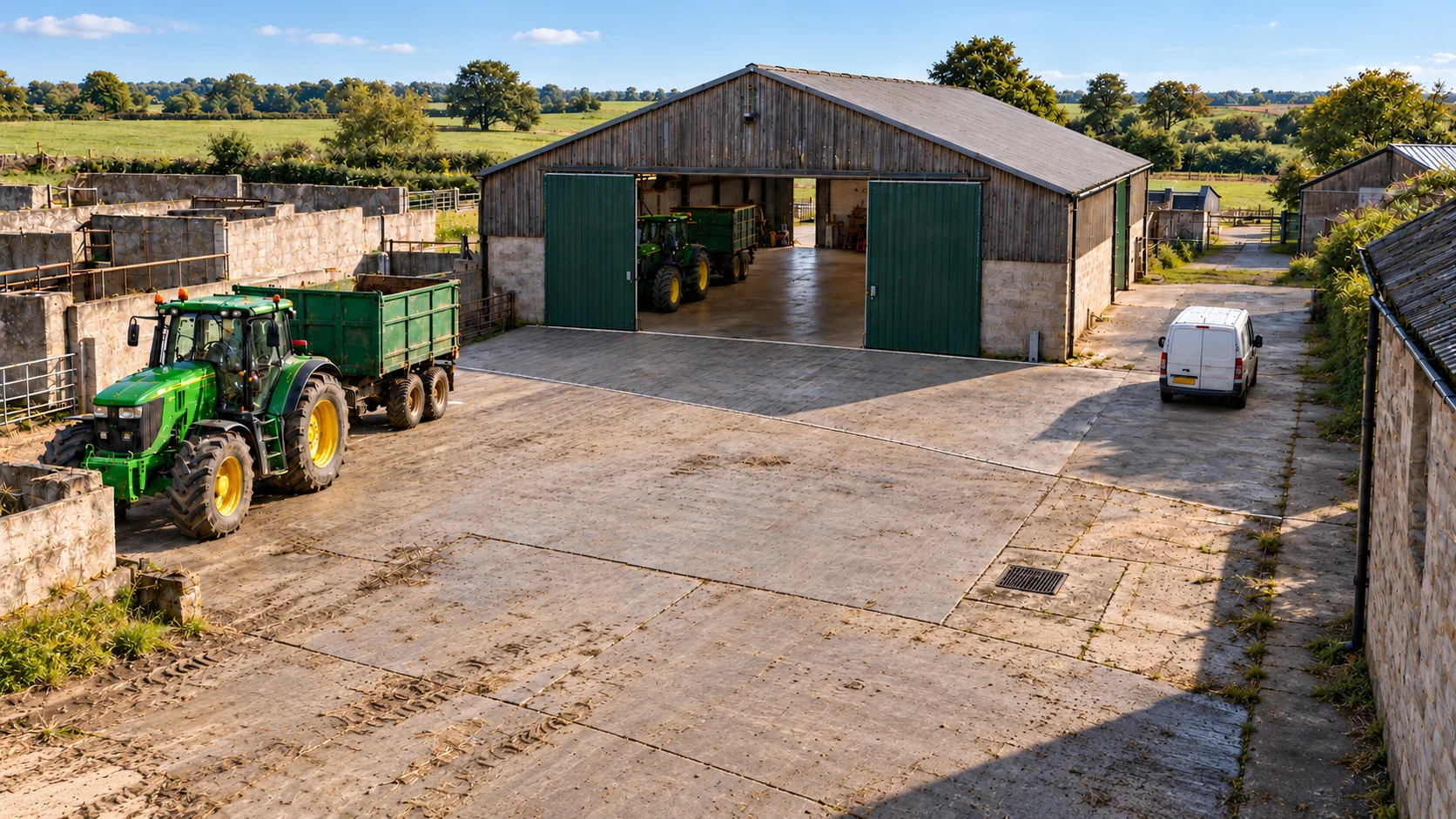
A barn still needs maintaining when it is only partly used. A yard can take up space without bringing much back. If a suitable business can use what you can spare, that space could contribute to the property's income instead.
That could mean a seasonal arrangement, a regular occupier or a more substantial opportunity with a specialist business. We look at the return alongside the work, cost and commitment involved, so you can judge what is worthwhile for you.
The thinking behind the Passport
A commercial eye for your land.
A practical route to the right conversation.
See the possibilities.
We compare a broad range of business uses with the space you are comfortable offering, then narrow them against your access, dates, services and ground rules. The Passport shows the strongest routes, not every idea considered.
Work through the practicalities.
Access, existing use, services, neighbours, planning and development questions can all change the answer. We identify what needs checking and where specialist input is needed.
Understand the business.
We speak to businesses about the sites and operating conditions they need. Those requirements help us assess which opportunities could be worth pursuing together.
Inside an illustrative Asset Passport
Here’s what we would look for
on a working holding.
The owner wants to explore another source of income while continuing to farm. There are buildings with some spare capacity, a yard, a paddock and woodland.
The owner’s brief comes first
The farm carries on.
Any new use works around it.
- Keep machinery routes and loading clear
- Retain farm tools and working space
- Keep the house and garden private
- Agree visitor hours and vehicle access
- Reflect seasonal changes in available space
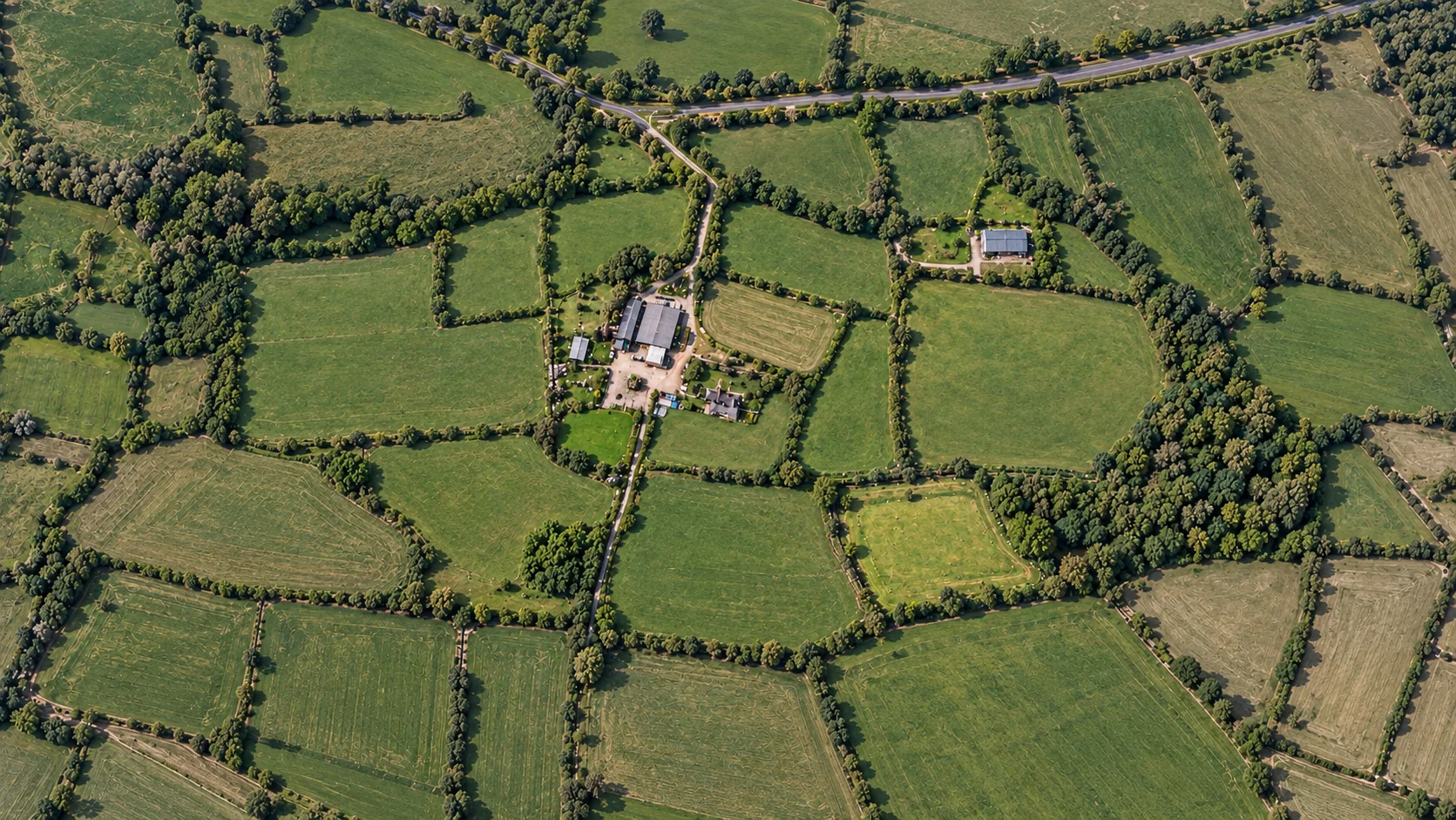
Illustrative holding
Dog exercise, outdoor activities or another seasonal use would each need their own brief. The owner’s farm use, vehicle movements, neighbours, ground condition and operating dates shape what is worth investigating.
Selected extracts from the assessment
Different spaces.
Different things to work through.
Select an area to see how the place, the owner’s ground rules and a business’s requirements affect the assessment.
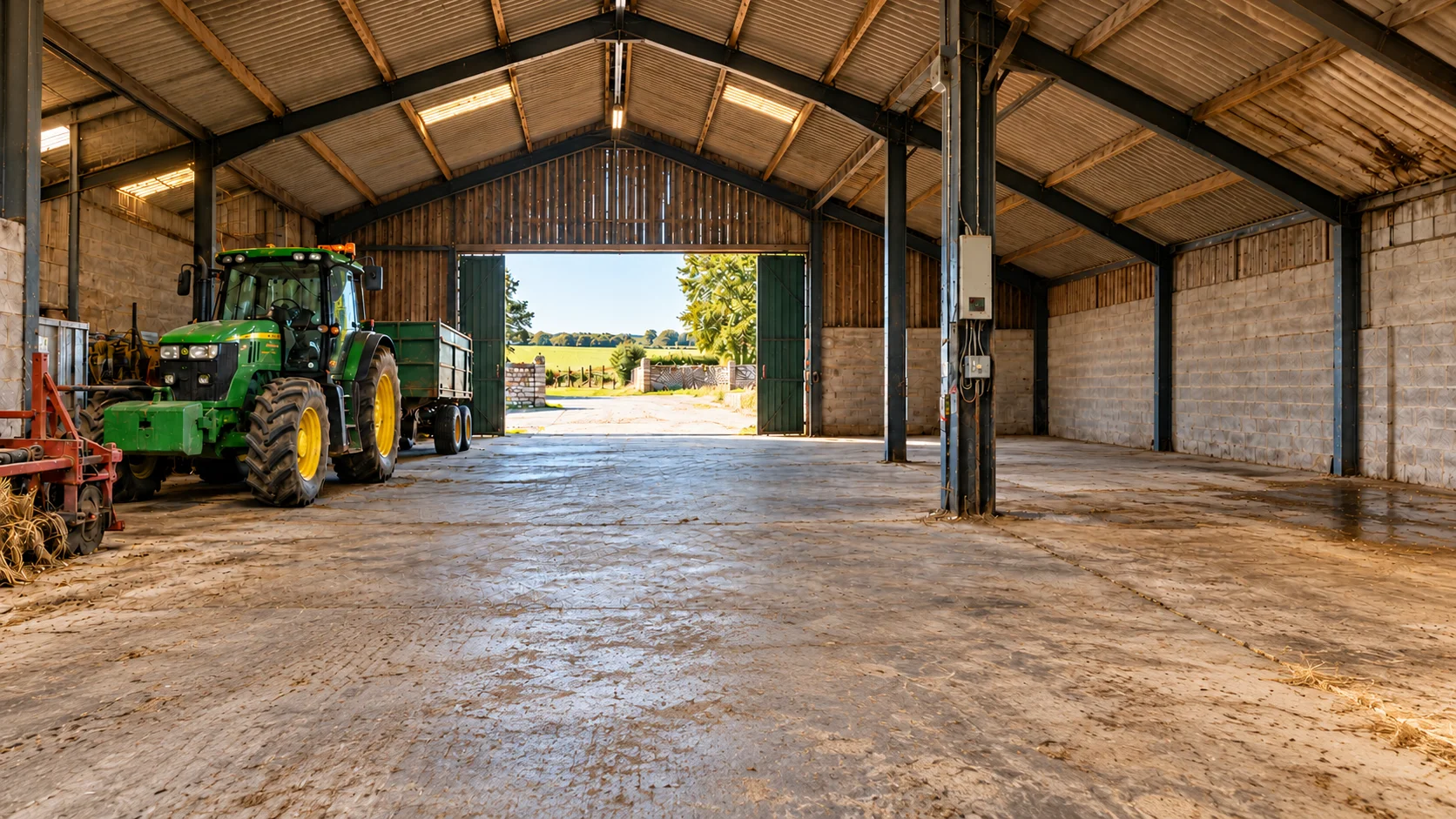
Owner access to machinery remains part of the brief.
The right business has to fit the working year.
The barn has more room as winter stocks run down, then less as harvest approaches. Some bays remain in farm use, and a roof issue needs investigating.
Storage, vehicle or equipment space, and workshop activity each raise different questions. We assess the proposed use against the actual bays, access and release period.
A business needing seasonal capacity may find a useful window here. A business needing steady capacity would have to fit within the space available throughout its agreed term.
The date the farm needs a bay back belongs in the conversation from the start.
Explore seasonal goods or equipment storage in the candidate bays, with a defined return date. Match the proposed goods to the building condition, access and security before progressing.
Space available by month
Peak illustrative release. Agree the goods, bays and return date.
Illustrative owner-offered space. Each proposed use needs its own assessment and agreed operating window.
Uses to compare
Goods storage
Match the proposed goods to the roof condition, security, access and available dates.
Vehicle or equipment storage
Check vehicle size, doors, fire requirements and a reliable hand-back arrangement.
Workshop or production
Compare power, separation, noise and the activity’s consent requirements.
Key conditions
- Retained farm bays and clear access
- Roof, structure and activity-specific fire questions
- Actual goods, customer requirement and agreed return date
How to read these findings
The finding describes commercial fit. Demand evidence and the next action are recorded separately. No finding grants permission to operate.
From a place to a possible arrangement
A useful introduction starts with
understanding both sides.
The owner has conditions for offering the space. The business has requirements for making it work. We compare the two: available area and dates, activity, access, services, possible works, investment and the terms each side would need.
Seasonal barn space.
- Defined bays and release dates
- Booked collections
- Smaller-vehicle access
- A return date that respects farm use
Temporary storage.
- Capacity for a particular period
- A building suited to its goods
- Deliveries within agreed hours
- A workable collection timetable
Establish the goods, capacity, condition, security, permissions, any works and commercial terms.
Discuss the defined opportunity with a relevant business, with the owner’s agreement.
Where there is a promising fit, we bring the relevant people together to explore the arrangement. You decide whether to take it further.
The record you receive
A Passport worth keeping.
A clearer next step.
Your Asset Passport brings the site, your ground rules and up to three ranked routes into one record.
It explains why each route is worth considering, the evidence behind it, what remains to be resolved and the next step we recommend.
For a promising use, that includes how it could operate, the likely involvement from you and the commercial questions still to agree. Where costs or income need further evidence, that is recorded clearly.
Where a route is not worth pursuing at present, the Passport explains why and what would need to change.
You receive the Passport. We use it as the basis for developing the opportunity with suitable businesses, with your agreement.
Illustrative Northumberland holding
Your ground rules.
Your opportunities.
Availability recorded through the year
- 01
Seasonal barn storage
Fit the goods and operating window.
- 02
A workshop occupier
Match the activity to the available half.
- 03
Small-group woodland use
Compare the concept and site conditions.
Explore the relevant business requirements and resolve the material questions before proceeding.
A person behind the work
You’ll deal with Jamie.
I’m Jamie Pratt. My degree is in building surveying; my work has been in development and construction project management. I’ve assessed land and buildings and worked through what could be done with them and what it would take.
With Estavelle, I bring that practical view into conversations with owners and businesses. I want to understand what would make an opportunity worthwhile for you, then work through whether the right business could make it happen.
The practical questions
What does it cost?
Landowners pay no Estavelle fee. Your first conversation, desktop Asset Passport and introduction are free. Estavelle is paid through the agreed business arrangement. Any works, specialist advice or other property costs are separate, and who pays them is agreed before anyone commits.
Do I need an idea already?
Tell us about the space and what you would be comfortable considering. Identifying suitable possibilities is part of the assessment.
Will this involve a site visit or formal surveys?
The Passport begins with a conversation, information you provide and a desktop commercial assessment. We agree the scope and delivery date with you. If a visit or specialist assessment would help, we explain the next step and agree any cost before further work.
Who pays if work is needed?
That depends on the opportunity and the arrangement. We work through the required works and funding with the parties before anyone commits. Estavelle does not fund physical works itself.
Does the Passport confirm permission to start?
It records a commercial assessment and the checks a route needs. Where planning, legal, structural, environmental or other specialist advice is required, we identify it. The Passport does not grant permission to operate.
What if the answer is no?
We'll explain which options we considered, why none looks worthwhile on the evidence available and what would need to change. If you'd like, we can keep your land on file and revisit it when a relevant requirement or practical circumstance changes. A fresh desktop look is free.
Start with a conversation
Let’s see what else
your land could do.
Tell us what you have, how you use it and what you would welcome.
We’ll start with a conversation and agree the next step.
Your land, your decision. We'll agree the next step together.
Looking for your next site? Tell us what it needs to do.